
On a wind tower, everybody inspects the outside. The failures come from the inside. If the surface inside the can is not prepared to the same standard as the outside, you discover it later — in rework, in warranty claims, and in towers that leave the yard late.
The surface nobody photographs
A tower can (also called a tower section) is a closed steel cylinder. During fabrication, storage and transport it collects exactly what a coating system cannot tolerate: mill scale, weld spatter, flash rust, condensation, and soluble salts from marine air. An outside inspector sees a clean, smooth tower. Inside, the same can may be sitting at a fraction of the required cleanliness.
That matters because most utility-scale tower coatings are specified for C4 or C5-M environments under ISO 12944, with surface preparation to Sa 2½ per ISO 8501-1 and a defined roughness profile — typically an angular profile that a coating can mechanically key into. Prep the outside and skip the inside, and the first coating failure usually appears as blistering or adhesion loss on internal surfaces, in the areas where moisture sits longest.
The practical rule: one tower, one surface standard. If your specification says Sa 2½ with a profile and a salt limit, it applies to both walls — and your equipment has to be able to reach both walls.
Two surfaces, one pass: how the equipment is built
This is the design problem a wind turbine tower inner and outer wall shot blasting machine solves. Instead of treating a tower section as a large flat plate, the machine treats it as a rotating cylinder with two surfaces to prepare:
- External blasting — blast wheels mounted on a travelling frame clean the outside of the can as it rotates.
- Internal blasting (interior shot blasting) — a cantilever boom carries blast heads into the bore, so the inner wall is cleaned in the same setup, without turning the section around.
- Self-propelled support frames — the tower section is driven into the workshop on powered bogies (in most tower shops this job is done by turning rolls / rotators). This removes the crane work that normally dominates the cycle time.
- Abrasive recovery and dust extraction — the abrasive is recovered, cleaned and recirculated; dust is extracted and filtered at the point of generation.
Images from a delivered project show the three elements working together: the external machine frame, the internal boom entering the bore, and the tower can arriving on self-propelled supports.
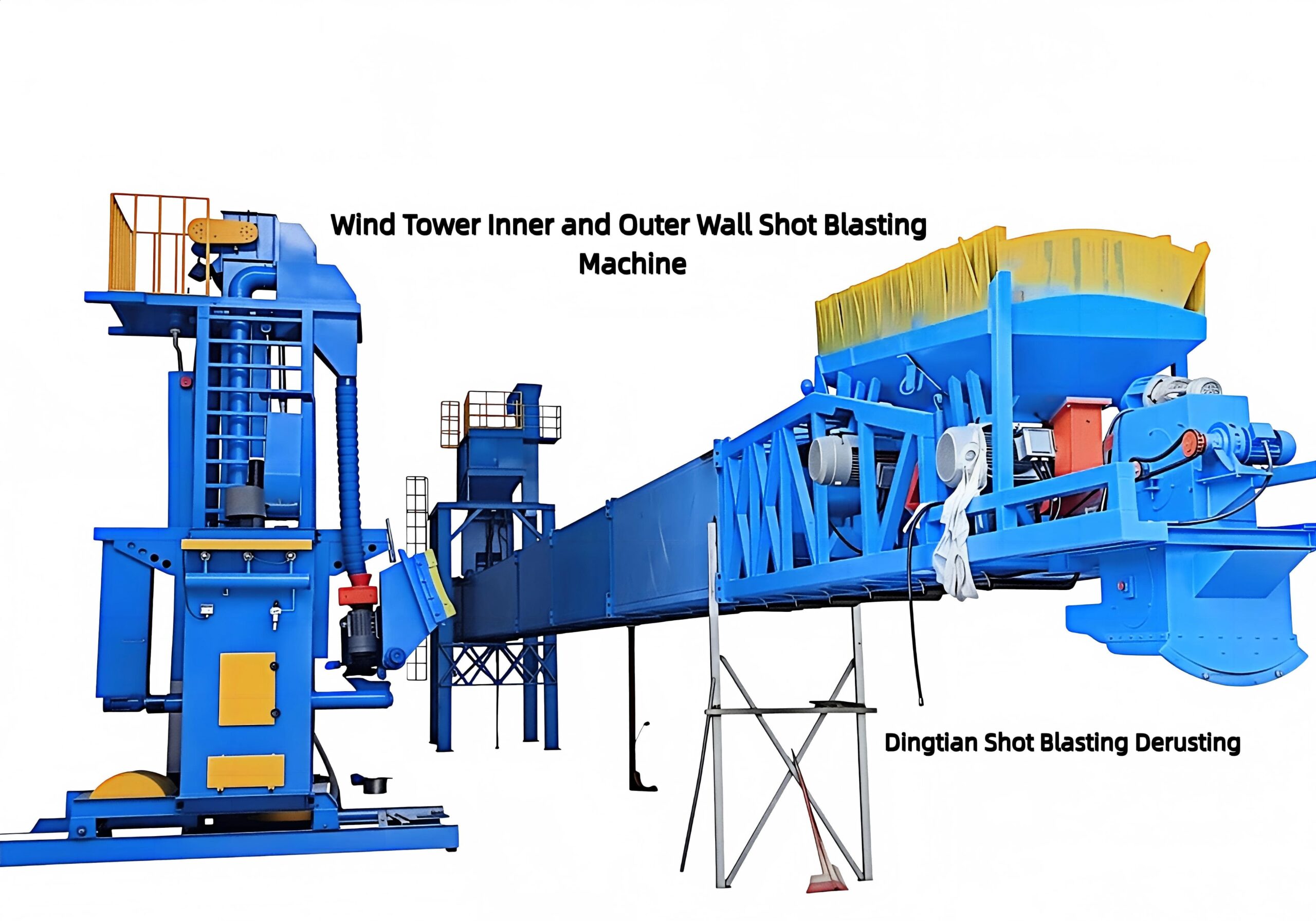
Figure 1 — External shot blasting unit: blast wheels, bucket elevator, abrasive separator and dust extraction.
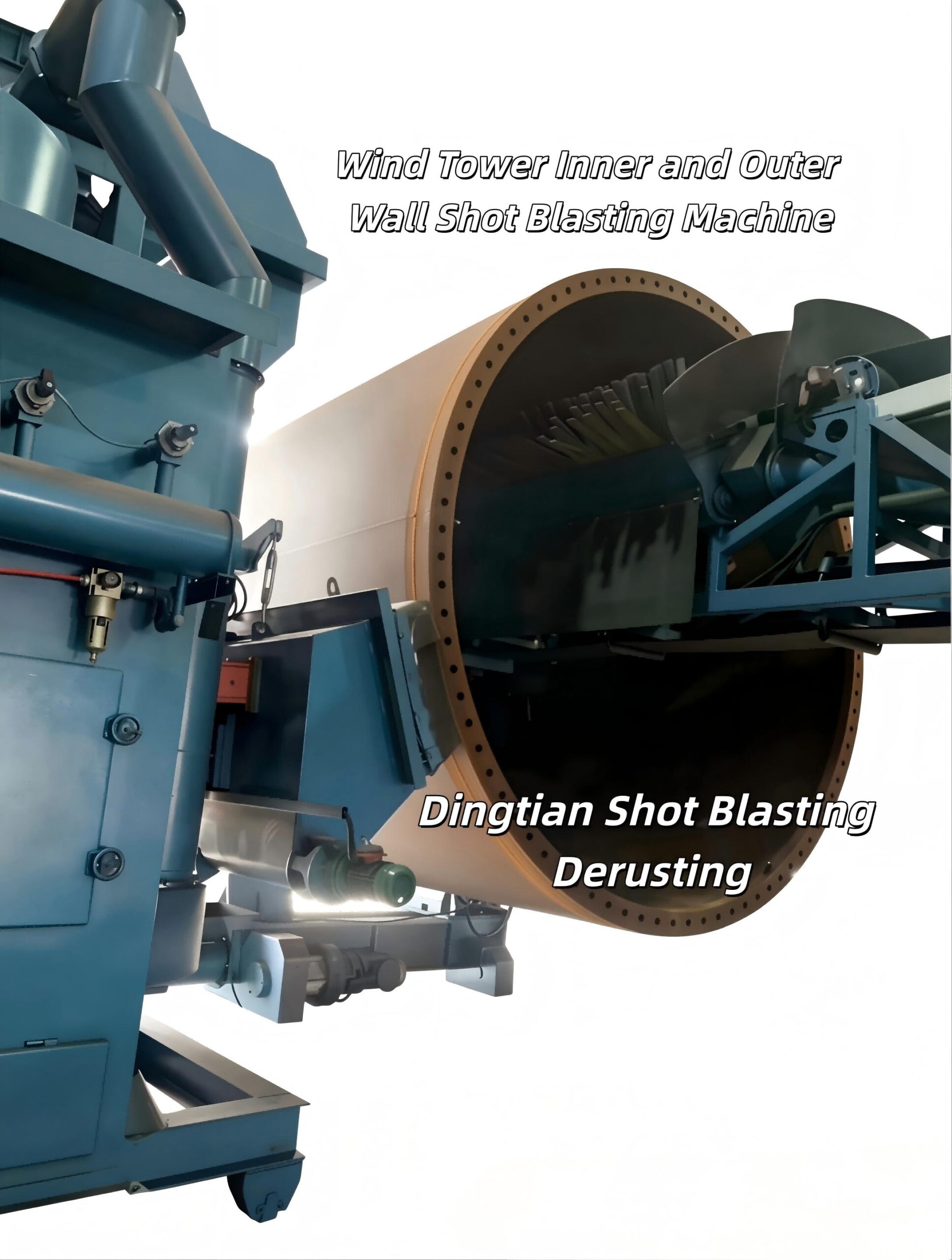
Figure 2 — Internal blasting: the boom with blast heads enters the bore and prepares the inner wall in the same setup.
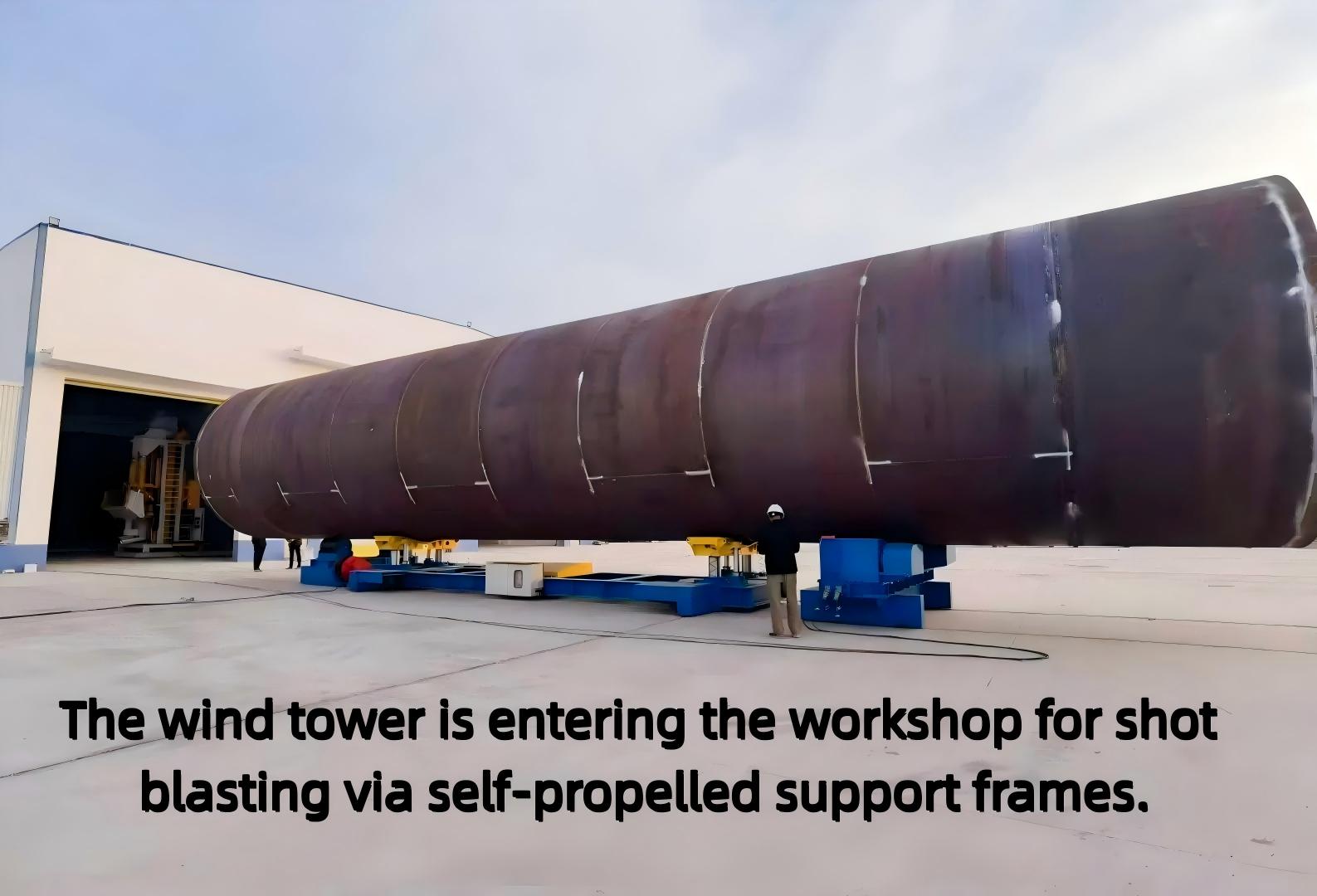
Figure 3 — The tower section enters the workshop for blasting on self-propelled support frames — no crane re-rigging between sections.
Why the internal boom is the deciding component
Anyone can put blast wheels next to a cylinder. The hard part is reaching the far end of a section up to tens of metres long, keeping an even profile along the whole bore, and doing it without a man inside the can. That is why the internal reach, the number and position of the blast heads, and the travelling accuracy of the boom matter more than the headline wheel power. It is also why, when you compare an interior shot blasting machine from different suppliers, the boom should be the first question you ask.
When we size a tower can blasting system, the internal boom is dimensioned first and the external unit follows. Get it the other way round and you end up with a machine that is fast outside and incomplete inside.
What to specify before you buy
- Can diameter range and section length — the bore sets the boom design; the length sets the stroke.
- Plate thickness and weld condition — welds and spatter change the energy you need per square metre.
- Cleanliness and profile — Sa 2½ and the roughness range your coating supplier requires.
- Soluble salt limits — increasingly specified for offshore work; it changes the abrasive and the washing step.
- Throughput — cans per shift, not square metres per hour. That is the number that pays for the machine.
- Coating system and line interface — if blasting feeds straight into a paint line, the two must share a takt time.
- Shop layout and rail system — the travel path of the self-propelled supports is what makes the cycle time realistic.
If the blaster is one station of a wind tower production line, lay it out together with the transport system, the rotating station and the paint line — retrofitting that interface later is where tower projects lose weeks.
Send us these seven items and you get a layout and a budget range, not a generic quotation.
Offshore monopiles and transition pieces
The same logic scales. An offshore wind monopile shot blasting machine faces heavier sections, thicker plate, tighter salt limits and a coating system that has to survive splash-zone conditions. The equipment principle does not change: external wheels, internal reach, powered supports, recovery and filtration — sized for a bigger part.
For offshore foundations specifically — monopiles and transition pieces — we wrote a separate deep dive: offshore monopile blasting: the splash zone starts in the blasting bay.
Consumables, uptime and spare parts
A blasting station is only as good as its uptime. The wear items are predictable — blast wheels, blades, control cages, protective plates, belts and rollers — and so are the two numbers that hurt: how fast a replacement arrives, and whether the abrasive you feed it is consistent.
We keep the wear parts for our own machines in stock, and roughly 70% of the references we supply for Wheelabrator, Pangborn and Sintokogio machines as well. We also manufacture the abrasive: cast steel shot and grit in grades from S70 to S930, packed in 1,000 kg big bags with 25 kg inner sacks, minimum order one tonne. For a tower line, that combination — machine, wear parts and abrasive from one supplier — is what keeps the profile consistent from the first can to the thousandth.
For the maintenance side, see our preventive maintenance checklist for shot blasting equipment; for replacements, see compatible wear parts.
For the shop-floor sequence — how a tower is actually blasted, painted and handed over, step by step — see our guide to wind turbine tower shot blasting: inner and outer wall.
Frequently asked
Can one machine prepare both the inner and outer wall?
Yes. External blast wheels and an internal blast boom work in the same setup, with the section rotating on powered supports — which is the whole point of this configuration.
How do you handle different tower diameters?
The support frames, wheel positions and boom are configured to a diameter range. Tell us your smallest and largest can and the section length, and the machine is designed around that envelope.
Do you supply the full wind tower surface preparation scope, or only the blaster?
We manufacture the shot blasting stage, the abrasive, and the wear parts — and we build coating and painting lines, so the interface between blasting and painting can come from one supplier.
What information do you need for a quotation?
The seven points above. With those, we return a layout, a configuration and a budget range — normally within 24 hours.
Related topics
#WindTowerShotBlasting #WindTurbineTower #ShotBlastingMachine #SurfacePreparation #OffshoreWind #Monopile #ISO12944 #Sa25 #TowerManufacturing #BlastCleaning #RenewableEnergy #SteelFabrication