
Everyone argues about the splash-zone coating. Almost nobody argues about the blast underneath it. On an offshore monopile, the coating that lives or dies in the splash zone was decided months earlier — by the profile and the salt level achieved in the blasting bay.
What is actually different about a monopile
A monopile is not a bigger tower section. It is a different animal:
- Thicker plate and larger bores — the geometry that makes internal access the first engineering problem, not the last.
- Longitudinal and circumferential welds at scale — every metre of weld is a place where spatter and heat-affected scale change how the surface responds to blasting.
- Higher salt limits — offshore specifications increasingly treat soluble salts as a first-class parameter alongside cleanliness and profile.
- Coating systems built for immersion and splash — referenced against ISO 12944-9 for offshore structures rather than a standard C4/C5-M atmospheric case.
- Secondary steel and transition pieces — ring stiffeners, flanges, anodes, access steel: many small surfaces with the same standard as the main can.
Why the blasting bay decides the splash zone
A coating adheres mechanically to an angular profile, and chemically to a clean steel surface. Both are created in one place: the blasting station. If the profile is shallow, the coating has nothing to grip. If soluble salts remain at the surface, the coating fails from underneath — and no amount of extra topcoat thickness in the splash zone compensates for that.
That is why the specification conversation should start with surface preparation, not with the coating system: cleanliness (Sa 2½, ISO 8501-1), profile, and salt level, measured on the actual part — inside and outside.
What that means for the equipment
An offshore wind monopile shot blasting machine is designed around access, not around wheel power:
- Internal reach first. The bore of a monopile is the hardest surface in the workshop: long, closed and dark, with welds and stiffeners. The cantilever boom, its travel accuracy and the number and position of the blast heads decide whether the inside is genuinely prepared or only nominally treated.
- External blasting on a travelling frame. Blast wheels clean the outside of the can as it rotates, in the same setup as the internal pass.
- Heavy-duty support and rotation. Monopiles are transported and rotated on powered supports; the layout of that rail system is what makes the cycle time realistic.
- Recovery and filtration at scale. Abrasive consumption, separation and dust extraction scale with the part — and so does the cost of getting them wrong.
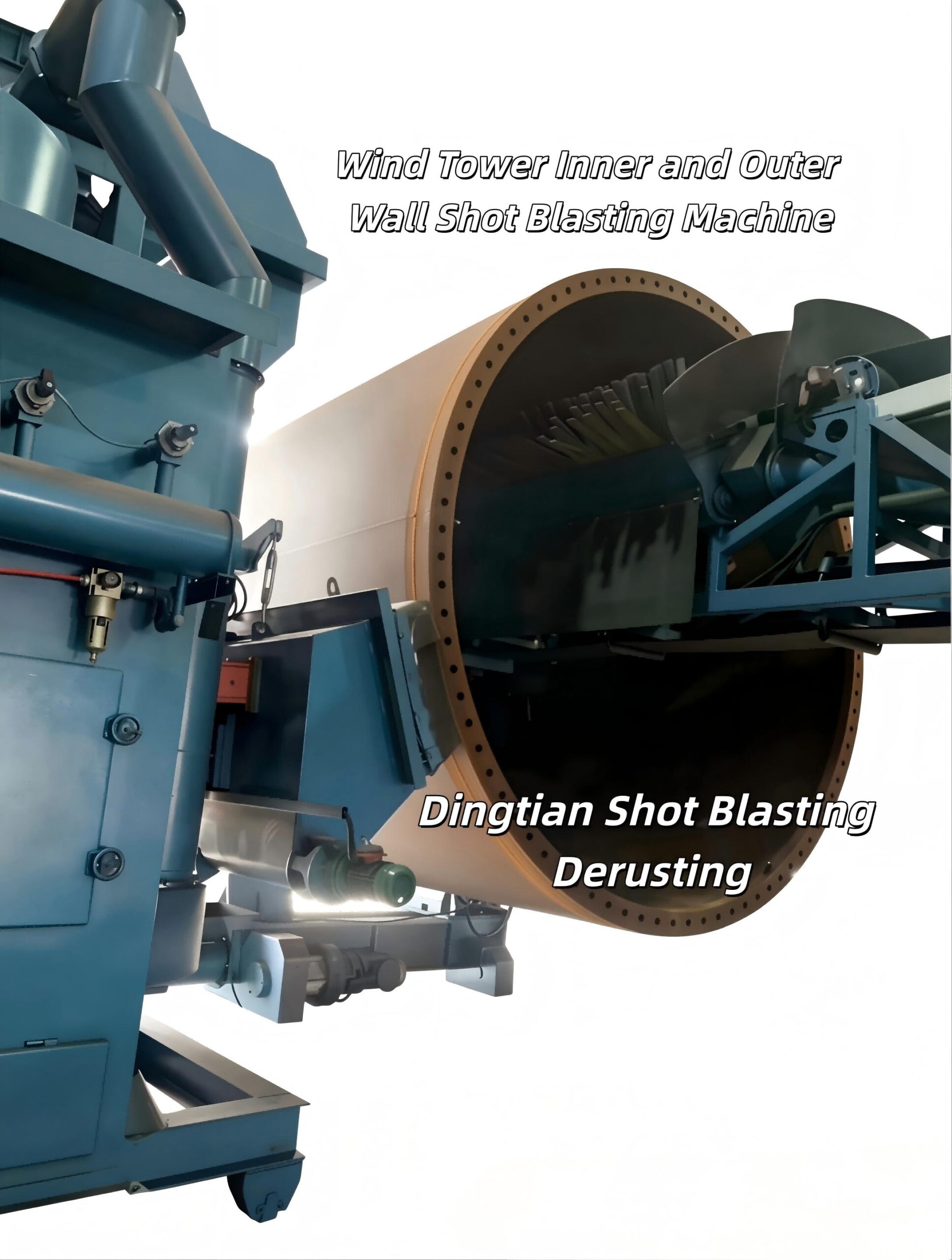
Figure 1 — Internal blasting in a tower project: the same access principle applies to monopiles, where the bore is longer, closed and full of welds.
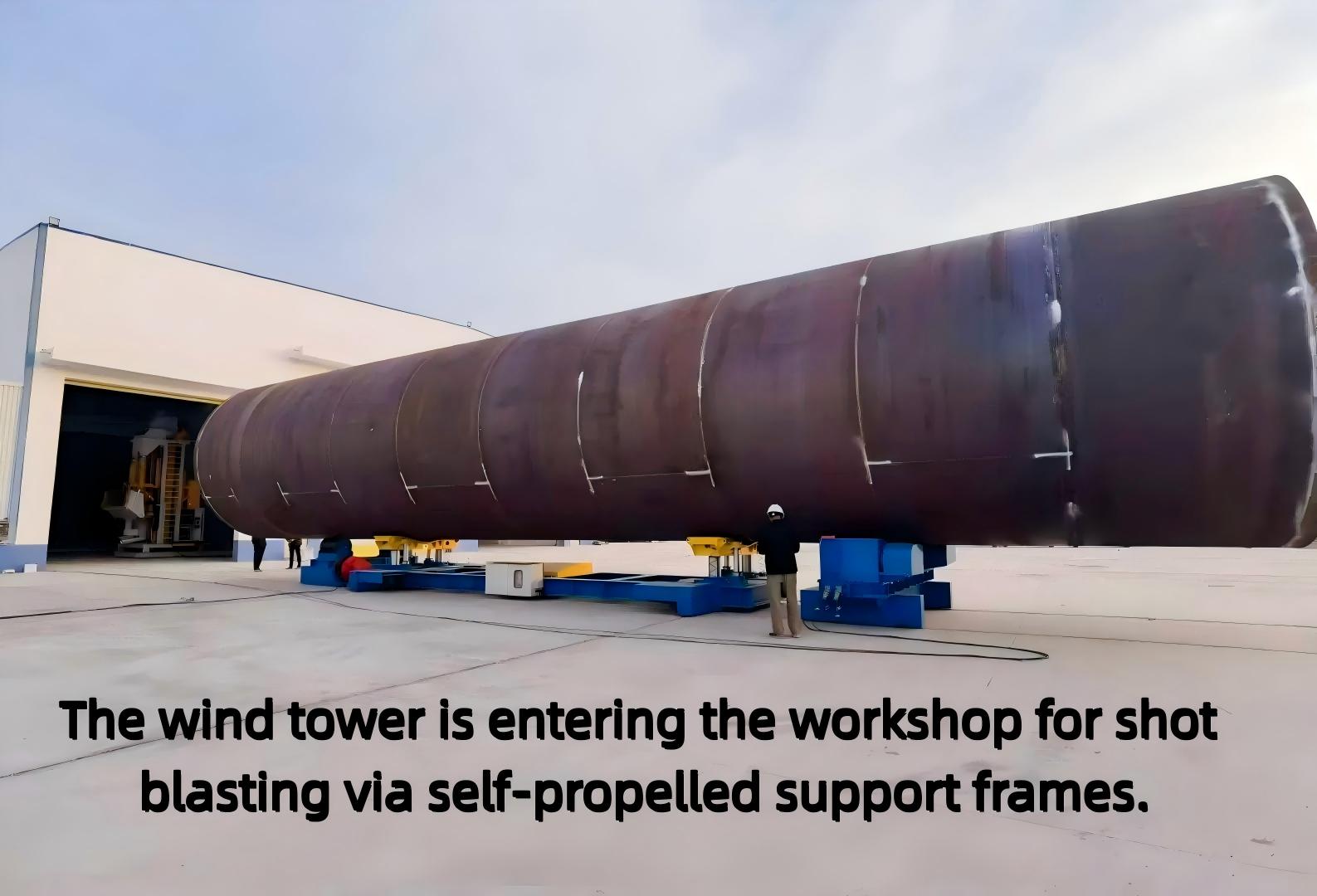
Figure 2 — Powered supports: heavy sections are transported and rotated on self-propelled frames, which is what makes the cycle time realistic.
This is the same architecture we use for towers: a monopile blasting system is, in engineering terms, a tower blasting machine sized for a heavier part with tighter salt limits.
What to specify before you buy
- Diameter range and section length — sets the boom design and the stroke, and therefore the whole machine.
- Wall thickness and weld map — determines energy per square metre and the number of blast wheels.
- Cleanliness, profile and salt limit — the three numbers your coating supplier will audit.
- Coating system and line interface — whether blasting feeds directly into a paint line, and at what takt.
- Throughput in tonnes per day, not square metres per hour — the number that justifies the investment.
- Handling of secondary steel and transition piece shot blasting — do they go through the same station, or a separate one?
- Shop layout, rail system and crane strategy — where the parts come from and where they go next.
Send us these seven items and you get a layout and a budget range, not a generic quotation.
Transition pieces and secondary steel
Transition pieces, ring stiffeners and access steel are where offshore projects quietly lose schedule: small parts with the same surface standard as the main can, but no obvious place in the line. Decide early whether they share the main station (typically slower, more flexible) or run through a dedicated smaller machine (faster, but another asset to justify). Getting this wrong shows up as a bottleneck three months before load-out.
Consumables, uptime and spares
Offshore work rewards consistency. The wear items are predictable — blast wheels, blades, control cages, protective plates, belts, rollers — and the abrasive is a consumable you will buy for years. We keep wear parts for our own machines in stock, plus roughly 70% of the references we supply for Wheelabrator, Pangborn and Sintokogio machines, and we manufacture cast steel shot and grit from S70 to S930 in 1,000 kg big bags with 25 kg inner sacks, minimum order one tonne.
For a monopile line, that means the profile you validated in the first article is the profile you still get in the five-hundredth.
For the maintenance side, see our preventive maintenance checklist for shot blasting equipment; for replacements, see compatible wear parts.
The engineering logic here is the same as for towers. For the full picture of how both surfaces are prepared in one setup, start with our companion article: wind tower blasting — the inner wall decides coating life.
Frequently asked
Can one machine handle both monopiles and tower sections?
Frequently yes, if the diameter range and length overlap and the supports are sized for the heavier part. Tell us both part families and we will confirm whether one station covers them.
How do you verify the internal surface?
By specifying measurable criteria — cleanliness, profile and salt level — and by making the internal boom capable of reaching the full length. Access and measurement go together.
Is blasting in one pass realistic for immersion-grade coatings?
For many offshore coating systems, yes: correct profile and salt level in one setup is exactly what the coating supplier wants to see. Where a wash or salt-reduction step is required, it is designed into the line.
Do you also build the coating and painting stage?
Yes — we manufacture the shot blasting stage, the abrasive and the wear parts, and we build coating and painting lines, so the offshore wind surface preparation chain can come from one supplier.
Related topics
#OffshoreWind #Monopile #ShotBlasting #SurfacePreparation #ISO12944 #SplashZone #WindTurbineFoundation #TransitionPiece #Sa25 #SolubleSalts #BlastCleaning #RenewableEnergy